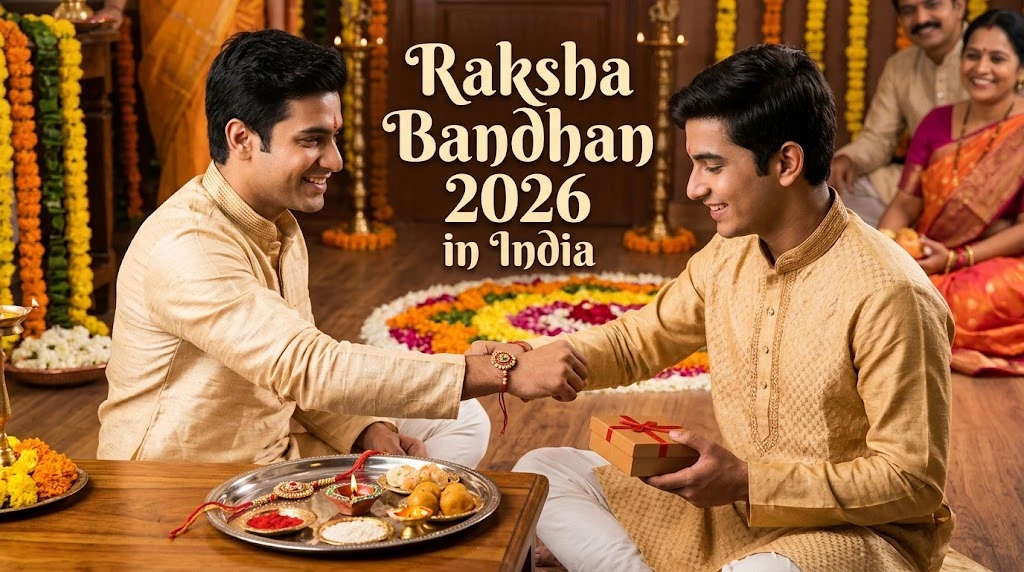
Raksha Bandhan is one of those festivals that brings families closer through simple but deeply meaningful moments. A sister choosing a beautiful rakhi, a brother pretending not to be nervous about the gift, parents preparing sweets, and everyone remembering funny childhood stories can make the day feel special. More than a festive ceremony, Raksha Bandhan celebrates the lasting connection between siblings.
For many families, the festival is filled with brother-sister love, childhood memories, family emotions, blessings, gifts, traditions, and togetherness. Even when siblings grow older and move to different cities, Rakhi becomes a reason to reconnect. A small thread can bring back years of shared memories.
If you are searching for Raksha Bandhan 2026 in India, this guide covers the date, significance, traditional rituals, wishes, messages, gift ideas, family celebrations, and modern ways to make the occasion memorable. Whether you celebrate with a traditional puja at home or connect through a video call, the heart of the festival remains the same: appreciating the people who have been part of your journey.
Raksha Bandhan 2026 Date and Day in India
Raksha Bandhan 2026 will be celebrated on Friday, August 28, 2026, in India. The festival falls on Shravan Purnima, the full moon day of the Hindu month of Shravana. Timeanddate also lists August 28 as the 2026 Raksha Bandhan date in India.
The exact timing for Rakhi rituals can vary by location because Hindu festival timings depend on local sunrise, sunset, and the relevant lunar calculations. For example, Drik Panchang lists the Purnima tithi as beginning at 9:08 AM on August 27 and ending at 9:48 AM on August 28 for several Indian locations.
Families who follow a particular religious tradition should check a local Panchang for the most appropriate Rakhi tying time or Raksha Bandhan muhurat.
The important point for anyone planning ahead is simple: Raksha Bandhan in India falls on Friday, August 28, 2026.
This gives families plenty of time to arrange rakhis, gifts, sweets, traditional clothes, decorations, travel plans, and family gatherings.
What Is Raksha Bandhan and Why Is It Celebrated?
Raksha Bandhan is a Hindu festival that celebrates the bond between brothers and sisters. The word “Raksha” is commonly associated with protection, while “Bandhan” means a bond or connection. Together, the name reflects the idea of a meaningful relationship built on care, affection, trust, and responsibility.
Traditionally, a sister ties a rakhi around her brother’s wrist and offers prayers for his happiness and well-being. The brother gives a gift in return and expresses his love and support. However, the meaning of the festival has expanded with changing family relationships.
Today, Raksha Bandhan is not simply about one sibling protecting another. It is about mutual care and emotional support.
A brother may help his sister through difficult moments. A sister may encourage her brother when life becomes challenging. They may live far apart, have busy careers, or have completely different personalities, yet their childhood connection often remains strong.
That is why Raksha Bandhan continues to be meaningful for modern families. It creates an opportunity to pause, remember shared experiences, and celebrate a relationship that began long before adulthood.
Significance of Raksha Bandhan in Indian Culture
The cultural importance of Raksha Bandhan comes from its emphasis on family relationships, affection, blessings, and social bonds. The rakhi itself is small, but the emotions attached to it can be much larger.
For generations, families have used this festival as a time to come together. Relatives visit one another, sweets are exchanged, traditional meals are prepared, and younger family members learn about customs from older generations.
Raksha Bandhan also reflects the importance of promises within relationships. The traditional ceremony represents a commitment to care and stand by one another.
For some families, the festival also has spiritual significance. Different regional traditions and stories connect Raksha Bandhan with ideas of protection, devotion, and sacred bonds. Customs can differ across communities, so there is no single way that every Indian family observes the festival.
What remains consistent is the emotional message.
Relationships deserve attention. Love should be expressed. Family memories should be treasured.
That message makes Raksha Bandhan relevant even in a rapidly changing world.
Meaning Behind Tying a Rakhi
A rakhi is more than a decorative thread. It represents a relationship and the feelings connected with it.
When a sister ties a rakhi, the moment can symbolize affection, good wishes, trust, and a promise of continued family connection. The brother’s response traditionally includes blessings, a gift, and a commitment to care for his sister.
In modern families, the symbolism can be even broader. Siblings often support one another emotionally, financially, professionally, or simply through everyday encouragement.
The rakhi therefore becomes a reminder of all those moments that may never be written down but remain important.
Think about childhood memories: sharing snacks, fighting over television programs, borrowing clothes without asking, helping each other with schoolwork, celebrating birthdays, or keeping family secrets. Those experiences become part of the story behind the rakhi.
As adults, siblings may not meet every day. They may even live in different countries. Yet the rakhi can bring those memories back.
That is one reason the ceremony feels emotional for many families.
Traditional Raksha Bandhan Rituals and Rakhi Ceremony
Traditional Raksha Bandhan celebrations usually involve several simple but meaningful steps. Families may follow different customs depending on their region and beliefs, but a typical ceremony can include preparing a Rakhi thali, performing a prayer, tying the rakhi, exchanging gifts, and sharing sweets.
A Rakhi thali may include items such as a rakhi, roli or kumkum, rice grains, sweets, a diya, and other puja materials according to family tradition.
The sister may begin the ceremony by applying a tilak to her brother’s forehead. She then ties the rakhi around his wrist while offering prayers for his health, happiness, and prosperity.
The brother gives a gift and may offer blessings or a promise of support.
After the ceremony, the family often shares sweets and a festive meal.
Some families also decorate the home, wear traditional clothing, take family photographs, visit relatives, and spend the rest of the day together.
Because customs vary, families should feel comfortable following the practices that are meaningful to them. The purpose is not to create a perfect ceremony. It is to create a heartfelt one.
Raksha Bandhan and the Special Brother-Sister Relationship
The brother-sister relationship can be wonderfully complicated. Siblings can argue over small things and still become each other’s strongest supporters when it matters.
That mixture of teasing, friendship, competition, protection, and affection gives Raksha Bandhan its emotional character.
Childhood siblings often share experiences that nobody else can fully understand. They remember the same family holidays, school events, celebrations, embarrassing moments, and funny incidents.
As life changes, those memories become even more valuable.
Raksha Bandhan creates a moment to say what everyday life sometimes makes difficult to express: you matter to me.
The relationship does not have to be perfect. Brothers and sisters can have different opinions, personalities, careers, and lifestyles. What matters is the connection they choose to maintain.
A thoughtful phone call, handwritten note, family photograph, or simple conversation can sometimes mean more than an expensive present.
That is the emotional heart of Raksha Bandhan.
Heartfelt Raksha Bandhan Wishes for Brothers and Sisters
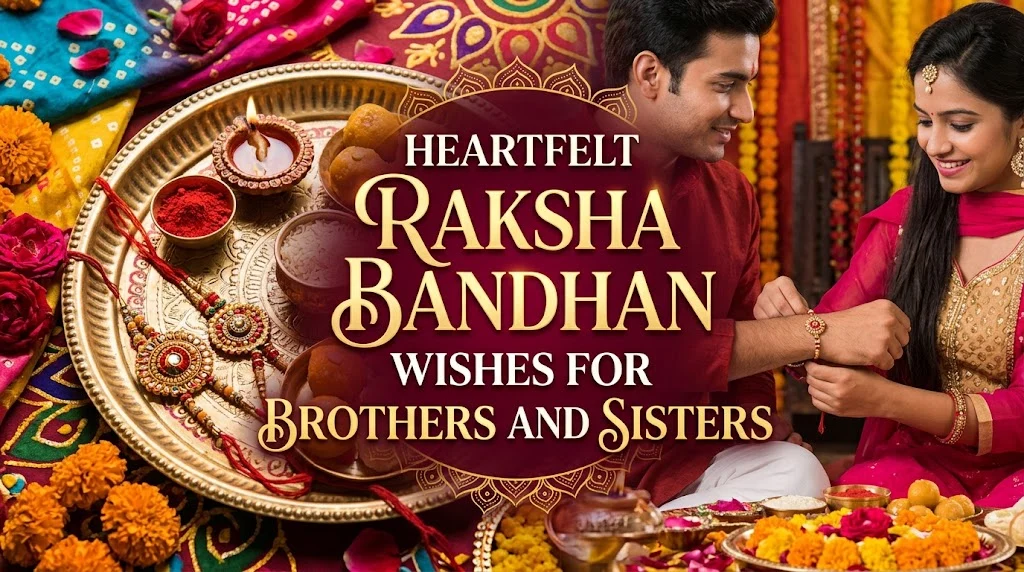
A good Raksha Bandhan wish does not need complicated words. The best messages are personal, warm, and connected to the relationship.
For a brother, a sister might write:
Happy Raksha Bandhan to the brother who has been my childhood partner, biggest supporter, and lifelong friend.
For a sister, a brother might say:
Wishing you happiness, success, and countless beautiful moments. I am grateful to have you as my sister.
Other heartfelt wishes can focus on memories:
From childhood arguments to unforgettable memories, every chapter with you has been special. Happy Raksha Bandhan.
A simple family-focused message could be:
May this Raksha Bandhan bring our family closer and fill our home with happiness, laughter, and beautiful memories.
For siblings living far apart:
Distance may keep us in different places, but it can never change the bond we share. Happy Raksha Bandhan.
The best wish is one that sounds like you. Personal words often create stronger memories than copied messages.
Beautiful Raksha Bandhan Messages for Cards and Social Media
Raksha Bandhan messages can be short, emotional, funny, or traditional depending on the relationship.
For a greeting card, a longer message works well:
Our childhood gave us countless memories, but growing up has taught me how valuable our relationship truly is. Thank you for always being part of my life. May we continue to support each other through every chapter. Happy Raksha Bandhan.
For social media, a concise message may be more suitable:
A childhood full of memories, a lifetime of shared moments, and a bond that keeps getting stronger. Happy Raksha Bandhan.
Another option is:
Some bonds begin in childhood and become stronger with every passing year. Grateful for my sibling today and always.
For a funny sibling message:
We may argue about almost everything, but nobody understands me quite like you do. Happy Raksha Bandhan.
The key is to match the message with your sibling’s personality. A sincere message feels more memorable when it sounds authentic.
Meaningful Raksha Bandhan Gift Ideas for Siblings
Gifts are an enjoyable part of the festival, but they do not have to be expensive. A thoughtful present can show that you understand your sibling’s personality and interests.
For a sister, possible gifts include:
- A personalized photo frame.
- A useful handbag or accessory.
- A favorite book.
- Skincare or self-care items.
- A personalized journal.
- A piece of simple jewelry.
- A gift card for something she enjoys.
- A handwritten memory book.
For a brother, consider:
- A watch or useful accessory.
- A wallet.
- A book based on his interests.
- Personalized stationery.
- A grooming gift set.
- A hobby-related item.
- A favorite snack collection.
- A thoughtful experience or outing.
You can also choose a personalized Raksha Bandhan gift based on a shared childhood memory. A framed photograph, customized keepsake, or small memory box can carry much more emotional value than a generic present.
The best gift is one that communicates thoughtfulness.
Raksha Bandhan Celebration Ideas for the Whole Family
Raksha Bandhan becomes even more memorable when the entire family participates.
One simple idea is to organize a family lunch after the Rakhi ceremony. Everyone can bring a favorite dish or prepare traditional sweets together.
Another idea is a family memory session. Ask parents and grandparents to share stories from the siblings’ childhood. Younger family members can record these stories and preserve them as a family keepsake.
A family photo session is another easy tradition. Instead of taking only formal pictures, capture natural moments during the ceremony, gift exchange, cooking, and conversations.
Families can also create a small Raksha Bandhan decoration corner with flowers, lights, photographs, and traditional elements.
For children, consider a simple activity such as making handmade rakhis. This gives them an opportunity to learn about the festival while creating something personal.
The goal is not to make the celebration complicated. It is to spend quality time together.
Raksha Bandhan Food, Sweets, and Festive Traditions
Food is an important part of many Indian celebrations, and Raksha Bandhan is no exception.
Families may prepare traditional sweets such as laddoos, barfi, kheer, rasgulla, or other regional favorites. Savory dishes can also become part of the family meal.
The menu does not need to be elaborate. Sometimes a sibling’s favorite homemade dish is more meaningful than an expensive restaurant meal.
You can also make the preparation itself part of the celebration. Brothers and sisters can cook together, decorate desserts, or prepare a special breakfast for the family.
For a modern celebration, families can combine traditional food with contemporary favorites.
What matters is the shared experience.
A kitchen filled with conversation, laughter, and familiar family stories can become one of the most memorable parts of Raksha Bandhan 2026.
Modern Raksha Bandhan Celebrations in 2026
Modern lifestyles have changed the way many families celebrate Raksha Bandhan. Siblings may live in different cities or countries, work long hours, or have responsibilities that make travel difficult.
Technology helps bridge that distance.
A sister can send a rakhi through an online delivery service. A brother can arrange a gift delivery. Families can organize a video call and perform parts of the ceremony together.
Digital photo albums, personalized video messages, online family games, and virtual dinner gatherings can also make long-distance celebrations meaningful.
Modern celebrations do not have to replace traditional customs. They can complement them.
A sibling living abroad might watch the Rakhi ceremony through a video call while the family gathers at home. Another sibling might send a handwritten letter along with the rakhi.
These ideas show how traditions can adapt without losing their emotional meaning.
In 2026, the most important part of the festival is still the relationship behind the celebration.
Raksha Bandhan Family Gathering and Childhood Memories
One of the most beautiful parts of Raksha Bandhan is the way it brings childhood memories into the present.
A family gathering may begin with the Rakhi ceremony but quickly turn into a storytelling session. Someone remembers an old holiday. Another person finds a childhood photograph. Parents recall a funny incident. Siblings start laughing about something that happened years ago.
These moments are valuable because they connect different generations.
Grandparents can share stories about how festivals were celebrated when they were young. Parents can explain old family customs. Children can learn why certain rituals are meaningful.
A family gathering can also be an opportunity to reconnect after a difficult or busy year.
Instead of focusing entirely on gifts and photographs, make time for conversation.
Put phones aside for part of the day. Ask siblings about their goals, challenges, and plans. Share a meal without rushing.
These simple actions can turn Raksha Bandhan into a meaningful family tradition rather than just another date on the calendar.
How to Make Raksha Bandhan 2026 More Memorable
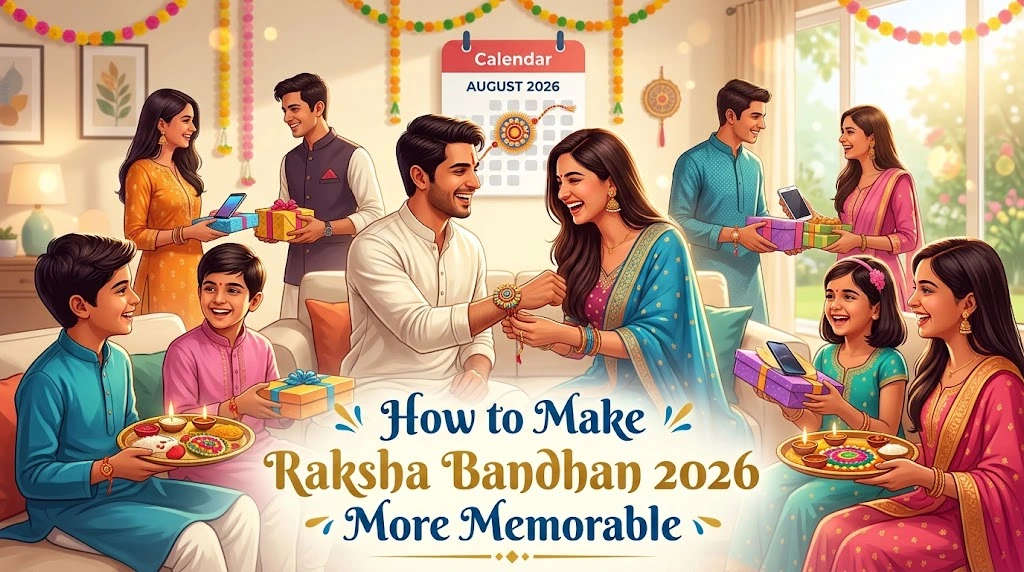
A memorable Raksha Bandhan does not require a large budget or elaborate event. It requires attention.
Start by planning something personal.
Create a small scrapbook containing childhood photographs. Write a letter describing your favorite memory together. Recreate a childhood meal. Watch an old family video. Visit a place that was important during childhood.
You can also create a new tradition for your family.
For example, siblings could exchange one meaningful promise every year. Another family might take the same group photograph annually. Some may choose to spend part of the day helping someone in need.
The most meaningful celebrations often combine old traditions with new memories.
If siblings live far apart, schedule the video call in advance. Send gifts and rakhis early. Share photographs during the day. Arrange a virtual meal or movie night.
If everyone is together, focus on quality time.
Years from now, people may not remember the exact price of a gift. They are more likely to remember the laughter, conversations, photographs, and feeling of being together.
That is what makes Raksha Bandhan special.
Why Raksha Bandhan Still Matters Today
Modern life is fast. People move for education, careers, relationships, and new opportunities. Families can become geographically separated even when they remain emotionally close.
Raksha Bandhan creates a pause.
It reminds siblings that relationships need care. It encourages families to reconnect. It gives people a reason to express appreciation instead of assuming that loved ones already know how they feel.
The festival also demonstrates how traditions can survive through change.
A traditional rakhi ceremony can happen in a modern home. A handmade rakhi can be paired with a digital gift. A family meal can include both traditional recipes and modern dishes. A long-distance sibling can participate through technology.
The form may change, but the emotional purpose remains.
Raksha Bandhan 2026 is ultimately about connection, appreciation, family, and love.
Whether the celebration is large or small, the most important part is remembering the people who have shared your journey.
Conclusion
Raksha Bandhan 2026 in India will be celebrated on Friday, August 28, 2026. The festival falls on Shravan Purnima and remains one of the most meaningful occasions for celebrating sibling relationships and family bonds.
From tying the rakhi and exchanging gifts to sharing sweets, family meals, blessings, wishes, and childhood stories, every tradition carries an emotional message. The festival reminds brothers and sisters that their relationship deserves time, appreciation, and care.
For some families, the celebration will happen around a traditional Rakhi thali. For others, siblings living far away may connect through a video call. Both can be meaningful when the intention is sincere.
The beauty of Raksha Bandhan is that it grows with us. Childhood memories become adult appreciation. Small traditions become treasured family rituals. A simple thread becomes a reminder of years of love and shared experiences.
As you prepare for Raksha Bandhan 2026, focus less on making the celebration perfect and more on making it personal. Give your sibling time, kind words, a thoughtful gift, or simply a heartfelt hug.
The greatest gift of the festival is not something wrapped in paper. It is the reminder that family bonds are worth celebrating, protecting, and carrying forward.
FAQs
1. When is Raksha Bandhan 2026 in India?
Raksha Bandhan 2026 will be celebrated on Friday, August 28, 2026, in India. It falls on Shravan Purnima. The exact auspicious timing for the Rakhi ceremony can vary by location, so families following traditional Panchang calculations should check their local timings.
2. What is the significance of Raksha Bandhan?
Raksha Bandhan celebrates the loving bond between siblings. Tying the rakhi symbolizes affection, blessings, care, and a commitment to support one another. The festival also brings families together and keeps cultural traditions alive.
3. What are the traditional Raksha Bandhan rituals?
Common rituals include preparing a Rakhi thali, applying tilak, tying the rakhi, offering prayers, exchanging gifts, receiving blessings, and sharing sweets. Customs can vary among families and regions.
4. What are good Rakhi and gift ideas for siblings?
Good Rakhi gifts include personalized keepsakes, books, watches, accessories, self-care items, gift cards, handmade presents, photographs, and experience-based gifts. Choose something that reflects your sibling’s personality and interests.
5. How can families celebrate Raksha Bandhan in modern ways?
Families can celebrate through video calls, online rakhi delivery, digital photo albums, virtual meals, personalized video messages, and online family activities. These modern ideas can be combined with traditional rituals to keep the celebration meaningful even when siblings live far apart.