Raksha Bandhan is one of those festivals that brings back memories before the celebrations even begin. A simple Rakhi can remind a brother and sister of childhood arguments, shared secrets, playful teasing, family gatherings, and countless moments spent growing up together. In 2026, families will once again come together to celebrate this beautiful bond with love, blessings, thoughtful gifts, traditional rituals, and cheerful family moments.
Raksha Bandhan 2026 will be celebrated on Friday, August 28, 2026, according to commonly used Hindu calendar calculations. The festival falls on the Shravana Purnima, or full moon day, and marks a special occasion for expressing affection, respect, care, and lifelong emotional connection between siblings.
Although the festival is traditionally associated with a sister tying a Rakhi around her brother’s wrist, its meaning has grown broader with time. Today, Raksha Bandhan celebrates family love, mutual support, gratitude, and the promise to remain connected through every stage of life.
Raksha Bandhan 2026 Date and Important Festival Details
The most important question for families planning their celebrations is simple: When is Raksha Bandhan 2026?
Raksha Bandhan 2026 falls on Friday, August 28, 2026. The festival is observed on the full moon day, known as Purnima, in the Hindu month of Shravana. According to the cited Panchang calculation, the Purnima Tithi begins at 9:08 AM on August 27 and ends at 9:48 AM on August 28.
The exact auspicious time for the Rakhi ceremony can vary by location. For example, the cited Delhi Panchang lists a thread ceremony window from approximately 5:57 AM to 9:48 AM. Other cities have slightly different timings because sunrise and local astronomical calculations differ.
Families who follow traditional Panchang guidance should check the timing for their own city before performing the ceremony. The date is widely established, but the Rakhi tying muhurat can vary by location.
Planning early can make the day much more enjoyable. Families can buy Rakhis, prepare sweets, choose gifts, decorate the home, and arrange travel before the festival arrives.
What Is Raksha Bandhan and Why Is It Celebrated?
Raksha Bandhan is a traditional Hindu festival that celebrates the bond between siblings. The word Raksha is associated with protection, while Bandhan refers to a bond or connection. Together, the name reflects the emotional promise represented by the Rakhi ceremony.
Traditionally, a sister ties a sacred thread called a Rakhi around her brother’s wrist. She offers prayers and wishes for his happiness, health, prosperity, and well-being. The brother traditionally gives his sister a gift and promises to support and care for her.
However, the festival is not only about protection in a literal sense. Modern families often understand Raksha Bandhan as a celebration of mutual care and emotional support.
A brother may stand beside his sister during difficult times. A sister may encourage her brother when he needs confidence. Their relationship can include disagreements, jokes, competition, and teasing, but beneath those moments is often a deep sense of belonging.
That is what makes Raksha Bandhan special. It celebrates a relationship that has usually been shaped by years of shared experiences.
Significance of Raksha Bandhan in Indian Culture
Raksha Bandhan has an important place in Indian culture because it gives families an opportunity to pause and appreciate relationships.
Indian family life has traditionally placed strong value on affection, respect, responsibility, and togetherness. Raksha Bandhan brings these values into a simple ceremony involving a thread, prayer, sweets, and gifts.
The Rakhi itself may be small, but its emotional meaning can be much greater. It can represent trust, affection, blessings, and a promise to remain connected.
The festival also reflects the importance of family traditions in Indian culture. Grandparents, parents, siblings, cousins, and other relatives may gather together. A home that is usually quiet can suddenly become full of conversation, laughter, food, and memories.
For many people, the emotional value of Raksha Bandhan becomes even clearer as they grow older. Childhood siblings who once lived under the same roof may later live in different cities or countries. The festival creates a reason to reconnect.
In this way, Raksha Bandhan keeps family relationships alive across distance and changing lifestyles.
Meaning Behind Tying a Rakhi
The Rakhi ceremony is the heart of the celebration. A sister traditionally ties the Rakhi on her brother’s wrist as a symbol of affection, goodwill, and the bond they share.
The thread is often viewed as a reminder of the relationship itself. It can represent promises, blessings, care, and emotional connection.
Before tying the Rakhi, families may prepare a puja thali containing items such as a Rakhi, kumkum or roli, rice, sweets, a diya, and other traditional materials. The sister may perform aarti, apply tilak, and then tie the Rakhi.
The brother may offer a gift in return. In many families, he also gives blessings and promises continued support.
The ceremony does not need to be elaborate to be meaningful. A simple Rakhi tied with genuine affection can carry more emotional value than an expensive celebration.
The most beautiful part is often the moment when siblings look at each other and remember everything they have experienced together.
Traditional Raksha Bandhan Rituals and Rakhi Ceremony
Traditional Raksha Bandhan rituals can vary between families and regions, but several customs are widely recognized.
The celebration often begins with getting dressed in clean or festive clothes and preparing the Rakhi ceremony area. A decorated thali may contain the essential items for the ritual.
The sister may first perform aarti for her brother. She then applies a tilak to his forehead and places rice as part of the traditional blessing. The Rakhi is tied around his wrist, followed by prayers or good wishes.
Sweets are then shared. The brother presents a gift to his sister, and family members exchange greetings.
Some families also perform a short puja before the Rakhi ceremony. Others keep the celebration simple and focus mainly on the sibling relationship.
Traditional food is another important part of the day. Sweets such as laddoo, barfi, peda, and other homemade or store-bought treats may be served.
For families that follow auspicious timings, it is important to check a reliable local Panchang. Traditional Panchang guidance also advises avoiding Bhadra when performing the Rakhi ceremony.
Brother-Sister Relationship and the Emotions of Raksha Bandhan
The emotional connection between a brother and sister is often built through thousands of ordinary moments.
It may begin with sharing toys, fighting over the television remote, borrowing clothes, protecting each other from parents, celebrating birthdays, or laughing at private jokes. Years later, these small memories can become some of life’s most precious moments.
Raksha Bandhan gives siblings a chance to recognize that journey.
A sister may remember how her brother helped her during childhood. A brother may remember his sister waiting for him after school or supporting him during a difficult time. These memories create an emotional history that cannot be replaced by material gifts.
The festival also reminds siblings that relationships evolve. Children become adults. They move away for education or careers. They start families of their own.
Yet a Rakhi can bring back the feeling of home.
That is why sibling bonding remains one of the strongest themes of Raksha Bandhan. The festival is not about pretending that siblings never disagree. It is about recognizing that love can remain strong even after disagreements, distance, and changing circumstances.
Heartfelt Raksha Bandhan Wishes for Brothers and Sisters
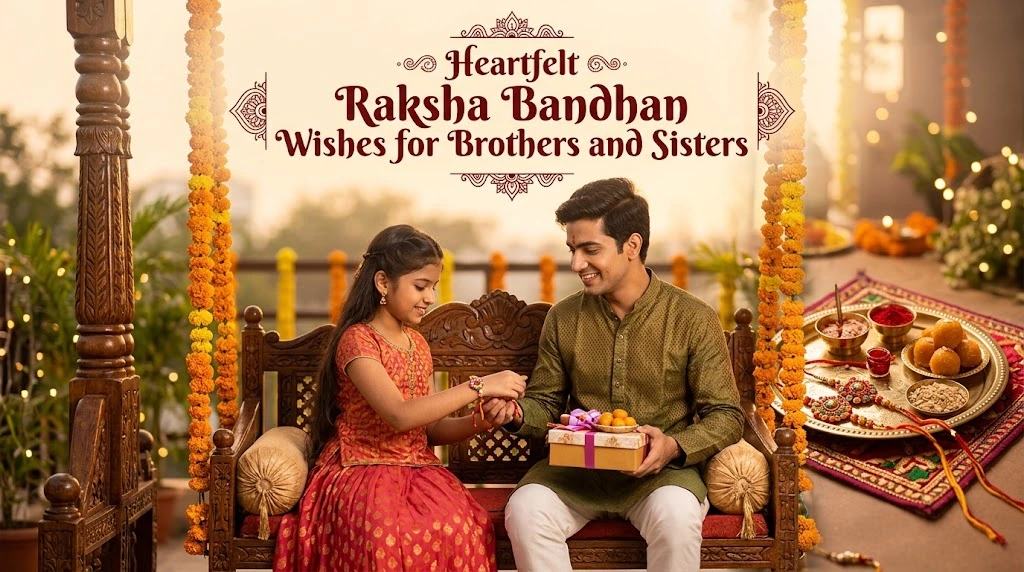
A meaningful Raksha Bandhan wish does not need to be complicated. The best message is usually personal and sincere.
A sister might write:
Happy Raksha Bandhan to the brother who has always been my protector, supporter, and lifelong friend. May you always be happy and successful.
A brother could write:
Happy Raksha Bandhan to my wonderful sister. Thank you for filling my life with memories, laughter, and unconditional love.
For a simple family message:
May this Raksha Bandhan bring happiness, peace, good health, and countless beautiful memories to our family.
For siblings living far apart:
Distance may keep us in different places, but it can never change the bond we share. Happy Raksha Bandhan.
A heartfelt message can also mention a shared memory. That often makes it more meaningful than a generic greeting.
The best wishes focus on love, gratitude, blessings, family, memories, happiness, and lifelong connection.
Beautiful Rakhi Messages for a Meaningful Celebration
Rakhi messages can be short, emotional, funny, traditional, or deeply personal.
A simple message can say:
A Rakhi is a small thread with a lifetime of memories attached to it. Happy Raksha Bandhan.
Another option is:
No matter how much life changes, being your sibling will always be one of my greatest blessings.
For a younger brother:
From childhood mischief to grown-up memories, every chapter with you is special. Happy Raksha Bandhan.
For a sister:
You are not only my sister but also one of the people who knows my story from the very beginning.
These messages work well in greeting cards, text messages, social media posts, or handwritten notes.
For families separated by distance, a personal video message can make the festival more emotional. A sibling can record a short message, share childhood photographs, and talk about a favorite memory.
Technology can help bridge physical distance, but the emotion should remain personal.
Meaningful Rakhi Gift Ideas for Brothers and Sisters
Gifts are a popular part of Raksha Bandhan, but the most meaningful gift is not always the most expensive one.
For brothers, sisters may consider:
- A personalized wallet or accessory.
- A book based on his interests.
- A watch or practical everyday item.
- A customized photo frame.
- A handwritten letter.
- A hobby-related gift.
- A favorite sweet or food box.
For sisters, brothers may consider:
- Jewelry or a simple personalized accessory.
- A handbag or useful fashion item.
- Skincare or self-care products.
- A favorite book.
- Personalized stationery.
- A photo album.
- A thoughtful experience or outing.
The best gift depends on the person’s personality.
Someone who loves books may appreciate a carefully selected novel more than a costly object. A sibling who values memories may prefer a photo album. Someone who enjoys experiences may love a special lunch or family outing.
The goal is not to impress. It is to show thoughtfulness and appreciation.
Raksha Bandhan Family Celebration Ideas for 2026
A family celebration can be simple and still feel special.
Start the day with breakfast together. Decorate a small corner of the home with flowers, traditional fabrics, or family photographs. Keep the Rakhi ceremony relaxed so everyone has time to enjoy the moment.
After the ceremony, families can share sweets and lunch. Take photographs while everyone is together. Ask grandparents to tell childhood stories. These conversations can become valuable memories for younger family members.
Another meaningful idea is a family memory session. Each sibling can share one favorite childhood memory. It could be funny, emotional, or completely ordinary.
Families can also create a small Raksha Bandhan photo album every year. Over time, it becomes a visual record of changing faces, growing children, and family traditions.
If relatives live nearby, consider inviting cousins and grandparents. If they live far away, schedule a group video call.
The most memorable celebration is usually the one where people spend genuine time together.
Raksha Bandhan Traditions Across Families and Generations
Raksha Bandhan traditions are not identical everywhere. Families often adapt the festival according to regional customs, personal beliefs, and family history.
Some households follow detailed puja rituals. Others focus on the Rakhi ceremony and family meal.
Some families celebrate only with brothers and sisters. Others include cousins, grandparents, spouses, and close family friends.
The meaning of the festival can also change between generations. Grandparents may remember simpler celebrations from their childhood. Parents may remember buying Rakhis from local markets and preparing homemade sweets. Younger people may combine those traditions with digital greetings and online shopping.
This flexibility is part of the festival’s strength.
A tradition remains alive when families continue its central values while allowing the celebration to fit modern life.
What matters most is preserving the spirit of love, respect, gratitude, blessings, and family bonding.
Modern Raksha Bandhan Celebrations in the Digital Age
Modern life has changed how families celebrate festivals, but it has not removed the emotional need to connect.
Siblings living in different cities can order Rakhis online and send gifts directly to each other’s homes. Video calls can allow family members to participate in the ceremony even when travel is impossible.
Digital photo albums, personalized videos, and voice messages can also make the day meaningful.
Social media has become another way to celebrate. Brothers and sisters may share childhood photographs, write heartfelt captions, or create short videos featuring family memories.
However, modern celebrations do not have to replace traditional rituals.
A family can perform a traditional Rakhi ceremony in the morning and have a virtual celebration with distant relatives later in the day. This combination allows tradition and technology to work together.
For many young people, this balance makes Raksha Bandhan 2026 feel both familiar and modern.
The important thing is to use technology as a tool for connection rather than allowing it to replace genuine interaction.
How to Make Raksha Bandhan 2026 More Memorable
Memories are often created through small details rather than expensive arrangements.
Write a handwritten note for your sibling. Choose a photograph from childhood and frame it. Recreate a favorite family meal. Watch an old family video together. Visit a place that was important during childhood.
You can also create a sibling time capsule. Each brother and sister writes down a few memories, hopes, funny moments, and wishes for the future. Put the notes in a box and open them on a future Raksha Bandhan.
Another idea is to create a family gratitude tradition. Each person says one thing they appreciate about another family member.
These activities shift the focus from material gifts to emotional connection.
If children are part of the celebration, involve them in decorating the Rakhi thali, preparing sweets, writing cards, or making simple crafts. This helps younger generations understand the meaning behind the festival.
A memorable Raksha Bandhan is not necessarily the biggest one. It is the one people remember with warmth.
Why Raksha Bandhan Still Matters in 2026
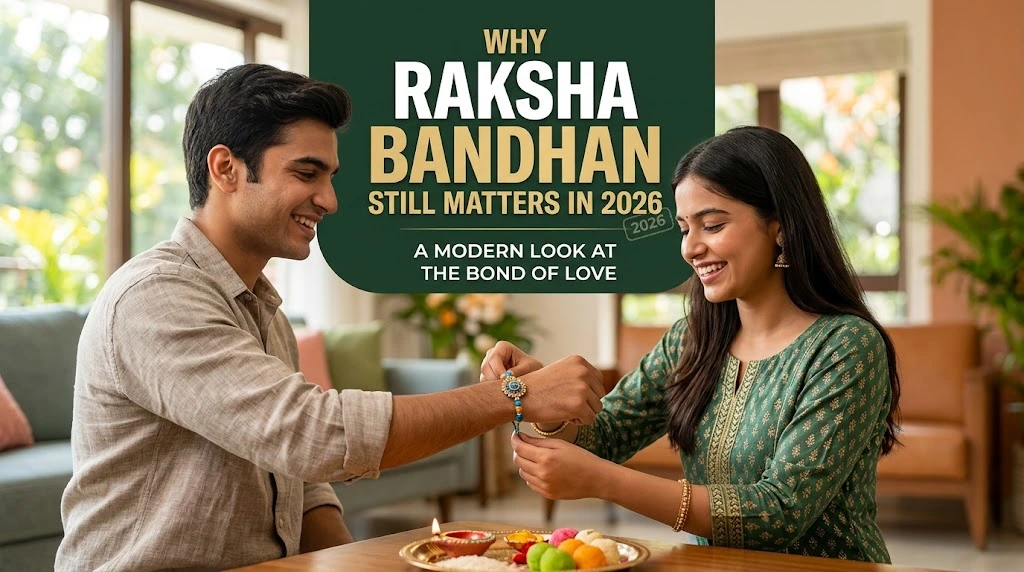
Life in 2026 is fast. People are busy with work, education, technology, travel, and personal responsibilities. Families may live thousands of miles apart.
That makes festivals like Raksha Bandhan even more meaningful.
The festival creates a natural opportunity to reconnect. It encourages people to call a sibling they have not spoken to recently. It gives families a reason to gather around one table. It turns an ordinary day into a reminder of shared history.
Raksha Bandhan also teaches younger generations that relationships require attention.
A Rakhi cannot solve every disagreement. A gift cannot replace communication. A festival cannot create a strong relationship by itself.
But one day of sincere appreciation can encourage people to value their relationships throughout the year.
The lasting message of Raksha Bandhan is therefore broader than the ceremony. It is about being present for the people who matter.
Raksha Bandhan 2026: A Celebration of Love, Family, and Lifelong Memories
As Raksha Bandhan 2026 approaches, the true value of the festival lies beyond Rakhis, sweets, decorations, and gifts.
It lies in the smile between a brother and sister. It is in the childhood story that everyone still remembers. It is in the blessing from a parent or grandparent. It is in the phone call made across hundreds of miles. It is in the quiet promise to remain connected even when life becomes busy.
Friday, August 28, 2026, will be a meaningful opportunity for families to celebrate these connections. The traditional Rakhi ceremony can remain at the center, while modern ideas can make the celebration easier for families living apart.
Whether your celebration is grand or simple, make time for the people you love. Share a meal. Exchange a heartfelt message. Look through old photographs. Laugh about childhood memories. Give a thoughtful gift. Most importantly, tell your sibling how much they mean to you.
Raksha Bandhan reminds us that family relationships are among life’s most valuable treasures. The thread tied around a wrist may be simple, but the memories and emotions connected to it can last a lifetime.
Conclusion
Raksha Bandhan 2026 is more than a festival marked by a date on the calendar. It is a celebration of brother-sister love, family traditions, blessings, childhood memories, and emotional connection.
The Rakhi ceremony brings siblings together and gives them a special moment to express gratitude and affection. Traditional rituals preserve the cultural character of the festival, while modern celebrations allow families separated by distance to remain connected.
A meaningful Raksha Bandhan does not require an expensive gift or a complicated celebration. Sometimes, a sincere message, a family meal, an old photograph, or a few hours spent together can create the strongest memories.
As families prepare for August 28, the most important thing to carry into the celebration is love. Tie the Rakhi with genuine affection, exchange blessings, remember the journey you have shared, and celebrate the people who have been part of your life from childhood onward.
Frequently Asked Questions
When is Raksha Bandhan 2026?
Raksha Bandhan 2026 will be celebrated on Friday, August 28, 2026. It falls on the Shravana Purnima, or full moon day. The exact Rakhi ceremony timing can vary by location, so families who follow Panchang timings should check their local calendar.
What is the significance of Raksha Bandhan?
Raksha Bandhan celebrates the bond between siblings. The Rakhi represents affection, blessings, care, trust, and a lasting family connection. The festival also provides an opportunity to appreciate the emotional relationship between brothers and sisters.
What are the main Raksha Bandhan rituals and traditions?
Common rituals include preparing a Rakhi thali, performing aarti, applying tilak, tying the Rakhi, offering prayers or blessings, exchanging sweets, and giving gifts. Specific customs can differ between families and regions.
What are good Rakhi and gift ideas for siblings?
Meaningful gifts can include personalized accessories, books, photo frames, handwritten letters, self-care items, hobby-related gifts, sweets, or memorable experiences. The best choice is something that reflects the sibling’s personality and interests.
How can families celebrate Raksha Bandhan in modern ways?
Families can combine traditional rituals with modern ideas such as video calls, online Rakhi delivery, personalized digital greetings, virtual family gatherings, photo albums, and memory videos. These options are especially useful when siblings live in different cities or countries.